

Global Trends in Spool Ribbon Manufacturing: What Distributors Should Watch in 2026
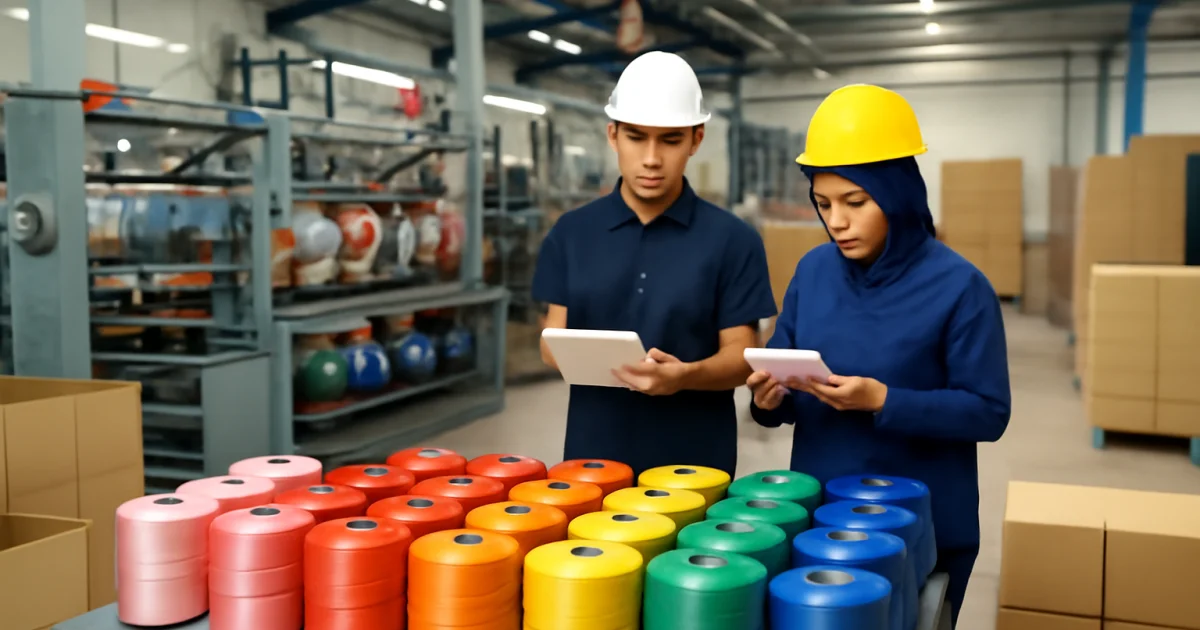
The global spool ribbon industry is undergoing rapid evolution, driven by shifting market demands, technological advancements, and changing regulatory expectations. For distributors, wholesalers, and POS system suppliers, understanding these changes is vital to securing a reliable supply chain and staying competitive in 2026 and beyond. This article examines the most significant global trends in spool ribbon manufacturing and outlines what every distributor should monitor as the industry continues to transform.
Automation and Smart Manufacturing
Manufacturers worldwide are embracing automation and Industry 4.0 principles. Automated production lines, robotics, and real-time quality monitoring have become standard in modern spool ribbon factories, improving efficiency while reducing the risk of defects. For distributors, partnering with a spool ribbon manufacturer that invests in advanced manufacturing ensures consistent quality, faster turnaround, and scalable capacity for bulk orders.
Smart manufacturing also enhances traceability. Distributors can now track ribbon batches from raw material sourcing through to final packaging, providing transparency for end customers. This is especially important for industries such as retail, banking, and logistics, where reliability and compliance are non-negotiable.
Sustainability and Eco-Friendly Materials
Environmental responsibility is taking center stage in 2026. Leading spool ribbon manufacturers are innovating with recyclable materials, water-based inks, and eco-friendly packaging. Distributors are increasingly asked by clients about the sustainability credentials of their consumables, prompting a shift toward greener options.
In addition to material choices, energy-efficient manufacturing facilities and responsible waste management are emerging as key differentiators. For example, ribbons produced with minimal emissions or using recycled plastic spools appeal to both environmentally conscious businesses and those seeking to meet new regulatory guidelines in their regions.
Expanding Compatibility and Customization
Distributors serve a broad array of end-users, from office equipment dealers to industrial barcode and label printing companies. In response, spool ribbon manufacturers are expanding their product compatibility across brands and models. Whether for dot matrix printers, typewriters, POS terminals, or cash registers, having a single source for various ribbon formats simplifies procurement and inventory management.
Customization services are also in demand. OEM and private label clients now expect tailored spool sizes, colors, branding, and even unique ink formulas. Advanced manufacturers can accommodate these requests through in-house capabilities such as custom plastic injection molding, ribbon slitting, and bespoke packaging. This enables distributors to differentiate their offerings and respond swiftly to niche market needs.
Quality Assurance and Certification
With global distribution networks and cross-border trade, quality assurance is more important than ever. ISO 9001:2015 and ISO 14001:2015 certifications are becoming the industry benchmark, providing distributors and their customers with confidence in product reliability and environmental management.
Manufacturers achieving these standards commit to rigorous quality control, including 100% inspection protocols and reliability testing. For distributors operating in sectors such as banking (where MICR ribbons are used for cheque processing) or logistics (requiring durable barcode ribbons), documented quality processes are essential for long-term success and customer trust.
Technological Innovations: Thermal Transfer and MICR Ribbons
Technological progress is reshaping the range of imaging consumables available. Thermal transfer ribbons—used extensively for barcode and label printing—are evolving with improved coatings for better print durability, resistance to chemicals, and compatibility with diverse substrates, including rubber and synthetic labels. Distributors serving barcode and label printing companies must stay informed about innovations in wax, wax-resin, and full resin ribbons for specialized applications.
MICR ribbons, vital for banking and financial document processing, have also seen upgrades in magnetic ink formulations to meet stringent regulatory requirements. Choosing a manufacturer with expertise in both standard and specialty ribbons ensures distributors can fulfill even the most demanding customer requests. For a deeper dive into barcode ribbon technology, see Thermal Transfer Ribbon Barcode.
Global Supply Chain Resilience and Regional Trends
Recent years have highlighted the importance of a resilient supply chain. Spool ribbon manufacturers with international market presence and flexible production capacity can better navigate disruptions, whether due to raw material shortages, logistics challenges, or shifts in regional demand.
Distributors are increasingly seeking partnerships with manufacturers that maintain in-house facilities and automated equipment. This approach reduces lead times and ensures the ability to fulfill large, urgent, or customized orders. With distribution spanning Asia-Pacific, Europe, the Americas, and beyond, it’s crucial to work with partners able to support export documentation, regulatory compliance, and responsive customer service.
Practical Considerations for Distributors in 2026
Given these trends, what should distributors look for when evaluating a spool ribbon manufacturer in 2026?
- Capacity and Scalability: Ensure the manufacturer can handle your order volumes and offer flexibility for growth.
- Compatibility: Look for a broad product catalog covering multiple printer, typewriter, POS, and cash register models.
- Sustainability: Ask about eco-friendly materials, packaging, and manufacturing practices.
- Certifications: Verify ISO and environmental standards to assure reliability and quality.
- Customization: Partner with manufacturers offering OEM/private label services, custom sizes, and branding.
- Support and Service: Value clear communication, fast response times, and comprehensive after-sales support.
For more guidance on selecting the right spool ribbon supplier for your business, you might find the article Choosing the Right Spool Ribbon for Your Printing Needs helpful.
Conclusion: Staying Ahead in a Rapidly Evolving Market
The spool ribbon manufacturing landscape in 2026 is defined by automation, sustainability, broad compatibility, and technological innovation. Distributors who keep pace with these trends and choose partners equipped for change will be best positioned to serve their customers and grow their businesses. Whether you supply printer consumables to local markets or distribute globally, aligning with a forward-thinking spool ribbon manufacturer offers a clear competitive advantage.
Staying informed and proactive is crucial. Evaluate your supply chain, ask the right questions, and seek manufacturers that demonstrate commitment to quality, innovation, and sustainability. In doing so, you not only meet current market demands but also future-proof your business in a dynamic global environment.
Frequently Asked Questions
What is a spool ribbon and how is it used?
A spool ribbon is a type of inked fabric or film wound on a spool, commonly used in impact printers, typewriters, POS machines, cash registers, and calculators. It transfers ink onto paper when struck by a print head or typebar, making it essential for offices, retail, banking, and industrial applications.
How are modern spool ribbon manufacturers improving product quality?
Modern spool ribbon manufacturers use advanced automation, real-time quality monitoring, and rigorous inspection protocols. Many operate under ISO 9001:2015 and ISO 14001:2015 certifications, ensuring consistent quality, environmental responsibility, and compliance with international standards.
Why is sustainability important in spool ribbon manufacturing?
Sustainability helps reduce environmental impact and meets growing customer and regulatory expectations. Manufacturers are adopting recyclable materials, water-based inks, and eco-friendly packaging. Distributors can benefit by offering greener options to clients and supporting responsible sourcing.
What should distributors look for in a spool ribbon manufacturer in 2026?
Distributors should prioritize manufacturers with broad product compatibility, scalable capacity, ISO certifications, sustainability initiatives, OEM and customization services, and responsive customer support. These factors help ensure reliable supply, product quality, and the ability to meet diverse market needs.
Can thermal transfer ribbons be used for printing on rubber materials?
Yes, certain types of thermal transfer ribbons, especially resin or specialized formulations, can print on rubber and other challenging surfaces. It’s important to select the right ribbon type for the application to ensure durable, high-quality results.
Partner with Omnimetric Technologies for Your Spool Ribbon Supply in 2026
Stay ahead of global trends by partnering with a trusted spool ribbon manufacturer. Omnimetric Technologies offers ISO-certified manufacturing, extensive compatibility, OEM/private label solutions, and a strong commitment to sustainability. Discover how our advanced production capabilities and international expertise can support your distribution goals.