

How Ink Rollers Affect Print Quality in Industrial Coding and Marking Systems
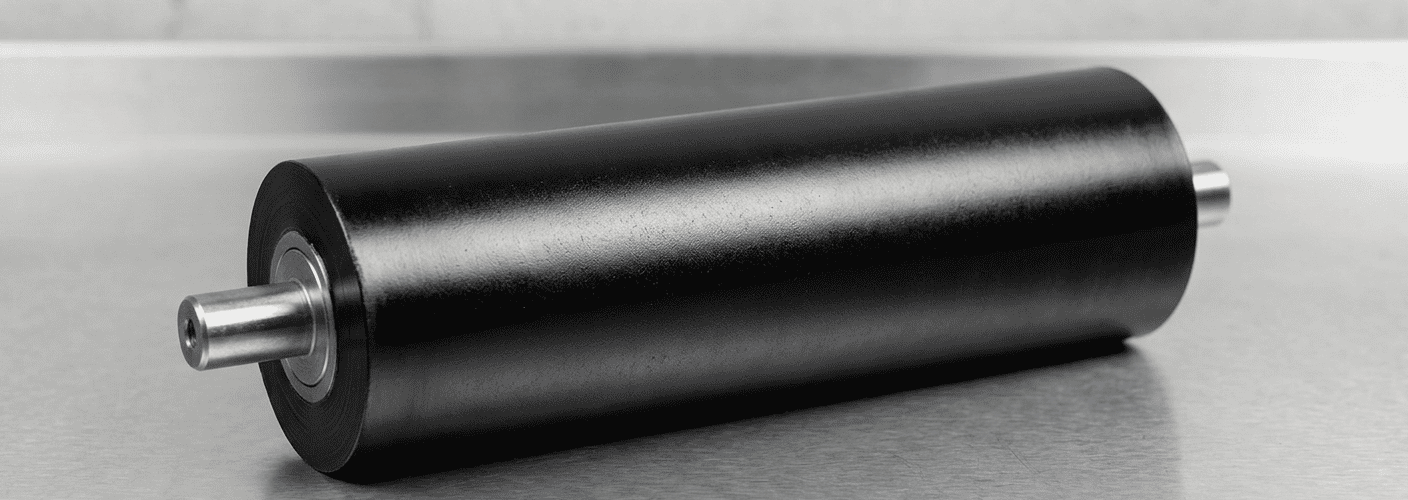
In industrial coding and marking systems, print quality plays a major role in product traceability, branding, and operational efficiency. One of the most important components behind consistent printing performance is the ink roller.
Choosing the right ink roller manufacturer is essential because the quality of the roller directly affects ink transfer, barcode readability, print consistency, and machine reliability. Poor-quality rollers can lead to faded prints, smudging, uneven coding, and increased production downtime.
For manufacturers operating in high-speed industrial environments, reliable ink roller performance is critical to maintaining production standards and reducing operational disruptions.
What Is an Ink Roller in Industrial Printing Systems?
Printer ribbons consist of a base film coated with a heat-sensitive ink layer. The base film determines flexibility and durability, while the ink formulation affects adhesion, smear resistance, and print longevity. Using inferior materials may lead to:
- Uneven ink transfer
- Residue build-up on printheads
- Increased wear and tear on printer components
High-quality ribbons use consistent, purified inks and stable base films, ensuring smooth ribbon movement and uniform transfer to label media. Facilities that understand the material composition of their ribbons can prevent costly downtime and print inconsistencies.
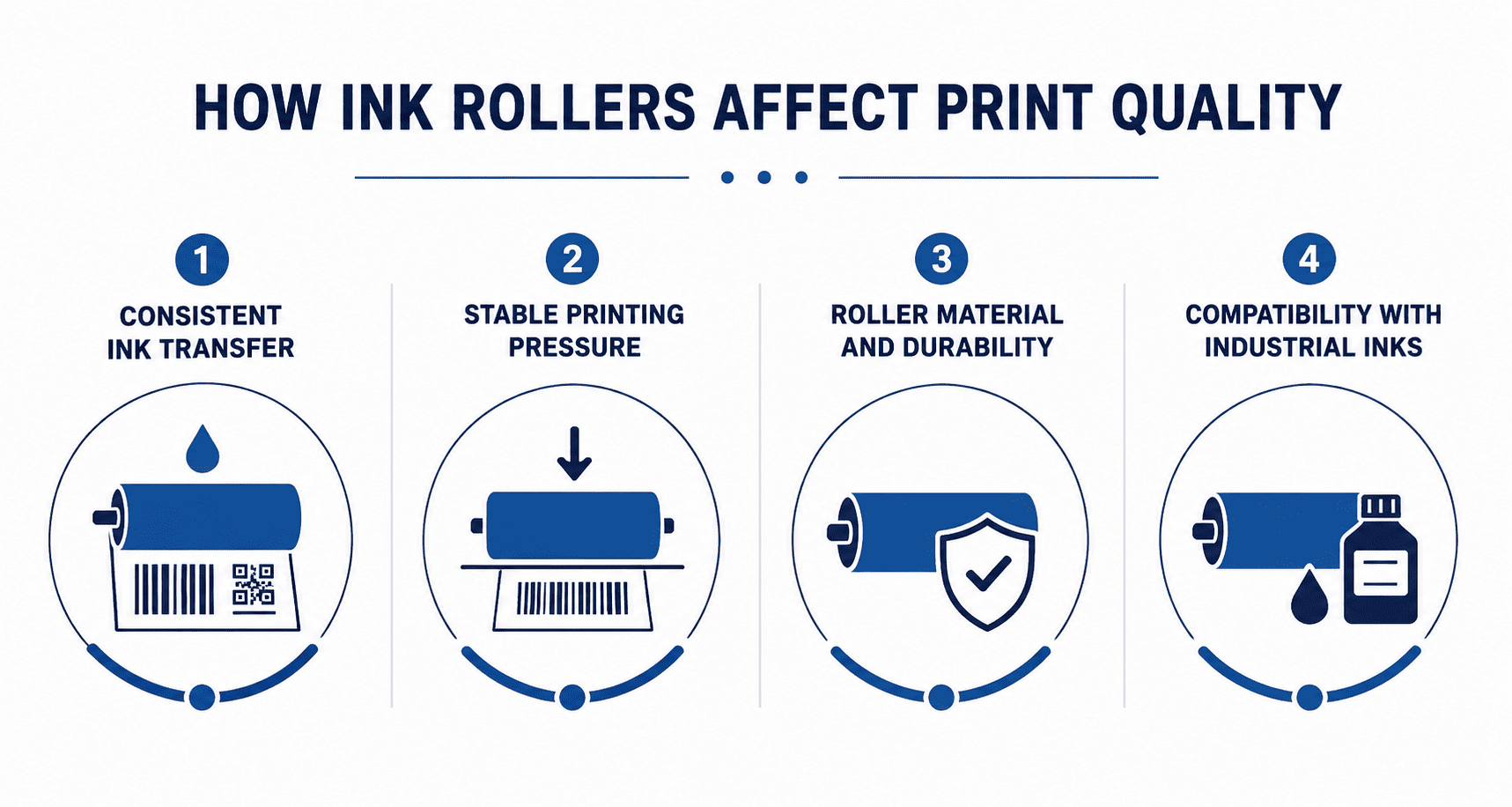
How Ink Rollers Affect Print Quality
Consistent Ink Transfer
Ink rollers are responsible for distributing ink evenly during the printing process. High-quality rollers ensure:
- Sharp barcode printing
- Clear batch codes
- Consistent character visibility
- Reduced smudging
Low-grade rollers often produce inconsistent ink coverage, leading to poor print readability.
Stable Printing Pressure
A precision-engineered roller maintains stable pressure against the printing surface. This improves:
- Print accuracy
- Line sharpness
- Barcode scanning performance
An experienced ink roller manufacturer designs rollers with balanced construction to support high-speed production environments.
Roller Material and Durability
The materials used in an ink roller affect its lifespan and printing consistency. Industrial-grade rollers are designed to resist:
- Heat buildup
- Ink chemical exposure
- Surface wear from continuous use
Durable rollers help manufacturers reduce maintenance frequency and production interruptions.
Compatibility With Industrial Inks
Different industrial inks require specific roller properties for optimal transfer performance. A reliable ink roller manufacturer ensures compatibility with various ink formulations used in:
- Packaging industries
- Logistics operations
- Electronics manufacturing
- Food and beverage production
Proper compatibility helps prevent ink bleeding, uneven printing, and excessive roller wear.
Common Print Problems Caused by Low-Quality Ink Rollers
Using poor-quality rollers can lead to several printing issues, including:
| Print Issue | Possible Cause |
|---|---|
| Faded printing | Uneven ink transfer |
| Smudged codes | Excessive ink release |
| Broken barcode lines | Roller surface wear |
| Inconsistent print density | Poor roller balance |
| Frequent machine stoppages | Low roller durability |
How to Choose the Right Ink Roller Manufacturer
When selecting an industrial ink roller supplier, manufacturers should evaluate:
Product Quality Standards
Look for manufacturers with strict quality control and consistent production standards.
Industry Experience
Experienced suppliers understand the requirements of industrial coding and marking systems.
Material Engineering
High-performance roller materials improve durability and print consistency.
OEM Manufacturing Capability
OEM support ensures compatibility with specific industrial printing equipment.
Companies such as Omnimetric provide industrial printing consumables and OEM solutions designed for demanding production applications.
Reliable Industrial Printing Solutions Backed by Manufacturing Expertise
With extensive experience in industrial coding and marking applications, Omnimetric provides high-quality ink rollers designed for consistent print performance and long-term durability. Every solution is developed to support demanding production environments where print clarity, operational efficiency, and reliability are essential.
Key advantages include:
- Industrial-grade ink roller manufacturing
- Consistent print quality for coding and marking systems
- OEM support for specialized production requirements
- Durable materials designed for continuous operation
- Reliable supply for industrial and commercial applications
- Technical expertise in barcode and printing consumables
From packaging and logistics to manufacturing and labeling systems, businesses rely on dependable printing components to maintain smooth and efficient operations.
Improve Print Quality With Reliable Ink Roller Solutions
Consistent printing starts with high-quality components. Whether you require industrial ink rollers for barcode systems, coding machines, or production line marking applications, choosing the right supplier helps reduce downtime and maintain clear, reliable print results.
Contact Omnimetric for reliable industrial printing solutions
Conclusion
Ink rollers play a critical role in industrial coding and marking systems. From ink transfer consistency to barcode readability, the performance of the roller directly impacts overall print quality and operational efficiency.
Choosing a reliable ink roller manufacturer helps ensure stable printing performance, longer equipment lifespan, and reduced production disruptions. For industrial environments where accuracy and consistency matter, investing in quality ink roller solutions is essential for long-term operational success.
Frequently Asked Questions (FAQs)
How long does an industrial ink roller typically last?
The lifespan of an industrial ink roller depends on usage frequency, printing speed, ink type, and operating conditions. High-quality rollers designed for industrial environments generally last longer and provide more consistent print performance.
What causes faded or uneven printing in coding systems?
Faded or uneven printing is often caused by worn ink rollers, improper pressure, poor ink transfer, or incompatible ink formulations. Regular maintenance and quality components help prevent these issues.
Can ink rollers be used with different types of industrial inks?
Some ink rollers are compatible with multiple ink types, while others are designed for specific formulations. It is important to choose rollers that match your printing system and ink requirements.
How do I know when an ink roller needs replacement?
Common signs include faded prints, inconsistent barcode quality, smudging, uneven ink coverage, and increased printing errors during production.
Why is choosing the right ink roller manufacturer important?
A reliable ink roller manufacturer provides consistent product quality, durable materials, and better compatibility with industrial coding and marking systems, helping reduce downtime and improve print reliability.